The Awakening of Collective Consciousness
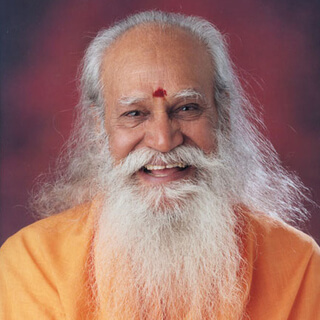
In the midst of the tumultuous 1960s, Swami Satchidananda proclaimed to a gathering of half a million people at Woodstock that the future of America lay in their consciousness. This statement resonates deeply, suggesting that the evolution of society is intrinsically linked to the awareness and mindfulness of its individuals. It invites us to consider how our collective consciousness shapes not only our present but also the trajectory of our future, emphasizing the profound responsibility we hold as participants in the unfolding narrative of humanity.
As we reflect on this quote, we are beckoned to explore the implications of consciousness itself. Satchidananda's words serve as a clarion call for introspection, urging us to recognize that our thoughts, intentions, and actions ripple outward, influencing the world around us. In an era marked by division and uncertainty, the notion that our individual and collective awareness can steer the course of history becomes not just a philosophical idea but a vital practice for fostering unity and compassion in our communities.
The image / the metaphor
At first glance, the imagery of "the future of America" resting in "their consciousness" evokes a sense of weighty responsibility. The choice of the word "rest" suggests a delicate balance, as if the future is precariously placed in the hands of those present. The gathering at Woodstock, a symbol of counterculture and collective hope, becomes a metaphor for the potential of human consciousness to transcend limitations and foster a new paradigm of existence. The verbs chosen—"told," "rests"—imply an active engagement, a call to awaken and recognize the power that lies within.
Diving deeper into the metaphor, we can see that consciousness is not merely a passive state of being; it is a dynamic force that shapes reality. The idea that the future is contingent upon this collective awareness suggests that our thoughts and feelings are not isolated but interconnected. This interconnectedness mirrors the principles of integral yoga, where the individual self is understood as part of a greater whole. The Woodstock gathering, then, becomes a microcosm of the potential for transformation that arises when individuals unite in shared intention and awareness.
In the speaker's tradition
Swami Satchidananda's teachings are rooted in the philosophy of integral yoga, which emphasizes the unity of body, mind, and spirit. Central to this tradition is the concept of dharma, or the moral order that guides individual and collective actions. By asserting that the future rests in consciousness, Satchidananda aligns with the idea that our ethical choices and awareness shape the fabric of society. This perspective invites us to cultivate a deeper understanding of our interconnectedness and the impact of our actions on the world around us.
In the context of integral yoga, we can draw parallels to the Buddhist concept of sunyata, or emptiness, which encourages the recognition of the interdependent nature of all phenomena. Just as sunyata invites practitioners to see beyond the illusion of separateness, Satchidananda's message at Woodstock calls for an awakening to the shared consciousness that binds us. This awakening is not merely an intellectual exercise; it is a transformative process that requires active participation in the cultivation of awareness and compassion.
Living the teaching
Consider a modern scenario where this teaching resonates: a community grappling with social injustice. In such a context, individuals may feel overwhelmed by the enormity of the issues at hand, yet Satchidananda's message reminds us that change begins within. By fostering a collective consciousness rooted in empathy and understanding, community members can come together to address systemic problems. This shared awareness can lead to meaningful dialogue and action, illustrating how the future of a community is indeed shaped by the consciousness of its members.
Another application of this teaching can be found in personal relationships. Imagine navigating a conflict with a loved one; the tendency may be to focus on grievances and differences. However, by embracing the idea that the future of the relationship rests in both individuals' consciousness, one can shift the focus toward understanding and healing. This perspective encourages a practice of active listening and compassion, allowing both parties to transcend their individual egos and work toward a shared vision of harmony and connection.
A reflection
As we contemplate Swami Satchidananda's profound assertion, we are invited to engage with a contemplative question: How can I cultivate a deeper awareness of my thoughts and actions to contribute positively to the collective consciousness of my community? This inquiry encourages us to reflect on our daily choices and their broader implications, reminding us that each moment presents an opportunity to shape the future through mindful engagement and compassionate action.


Join the BrightStar Community
Stay connected with daily inspiration, event announcements, and community wisdom